Learn Sanskrit through Story
Most of us meet Sanskrit as a wall — declension tables, sandhi rules, paradigms to memorize before a single sentence means anything. This series was born from a different wish: to come to the language through story, and to arrive at the great texts of the tradition already carried toward them.
It is built on an old principle — dhāraṇā, the holding that comes before knowing. The body remembers what the mind has not yet been told. A sound is felt in the chest before it is named. A grammatical case is met in something a character does — a hungry young lion is fed, and the dative is born; a cub walks into the forest, and the locative arrives — long before it is ever called a case. Nothing is explained until it has first been carried. By the time the rule is named, you already know it. The naming only tells you what your body has been holding all along.
The path is graded. It begins as a seed and grows toward its source.
It begins with Sarpa and Siṃhī: The Beginning — an illustrated picture book, and the original story, built the way the Hitopadeśa was built: a story inside a story, told around a fire. A lost cub, carrying a grief too heavy to hold, enters a cave and meets a serpent who comforts her with a story that mirrors her own loss — and then with another, one that turns her toward home. This is the root. Every book that follows grows from it.
It extends through Siṃhī: The Becoming — the novel: all thirteen books of her life, her grief, and the figures of the great tradition she meets along the way. Sanskrit is already here: in the sacred verses woven through each book, in the mantras, in the texts that arrive at the end of each encounter. A reader of the story is already touching the language before they open a primer. The world is built. The sounds are in the air.
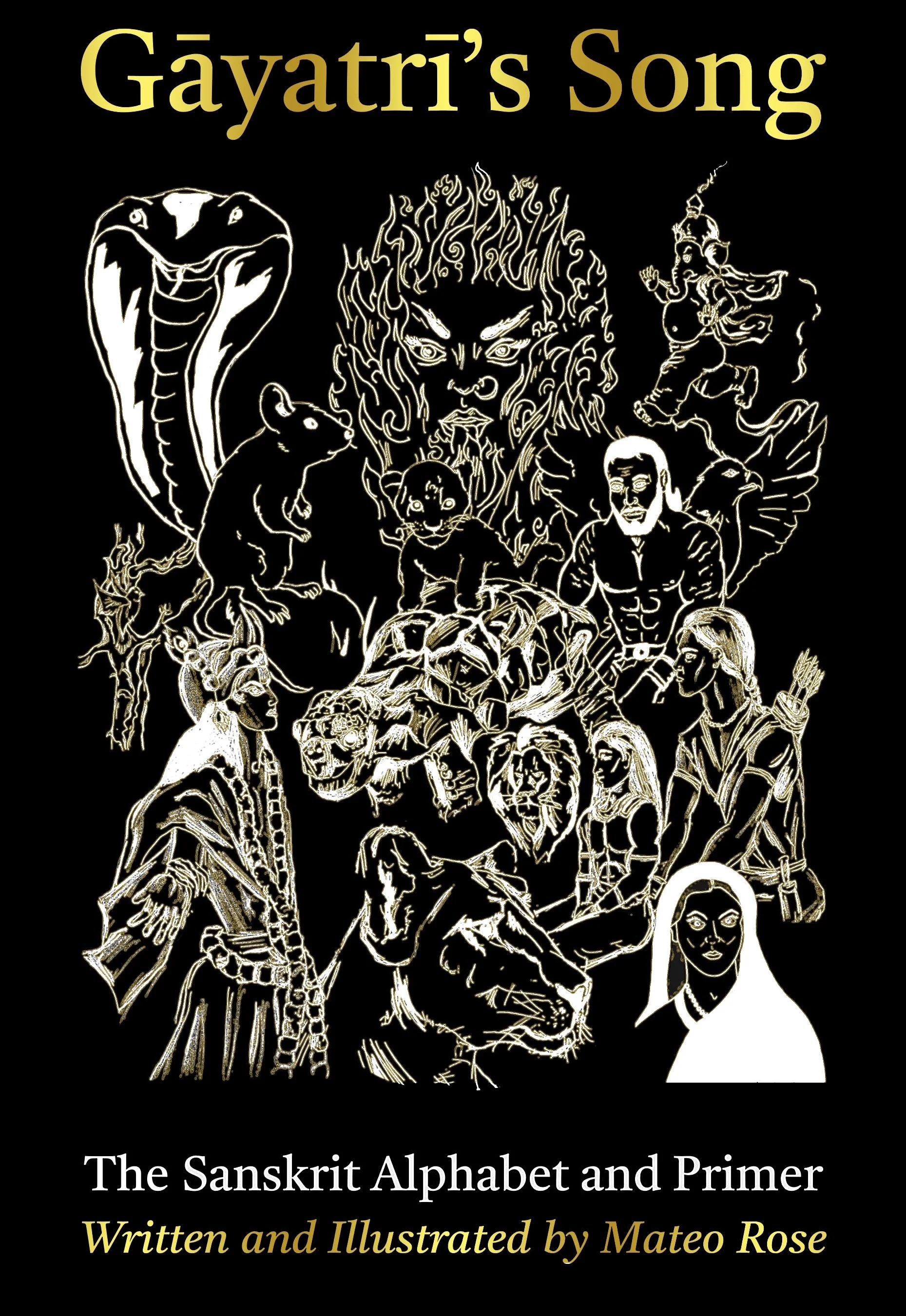
The dedicated language path begins with Gāyatrī's Song, where a lioness cub learns the entire alphabet — forty-six sounds — across three nights beneath an old tree, each sound given by her father as a thing she can feel before she is told its name.
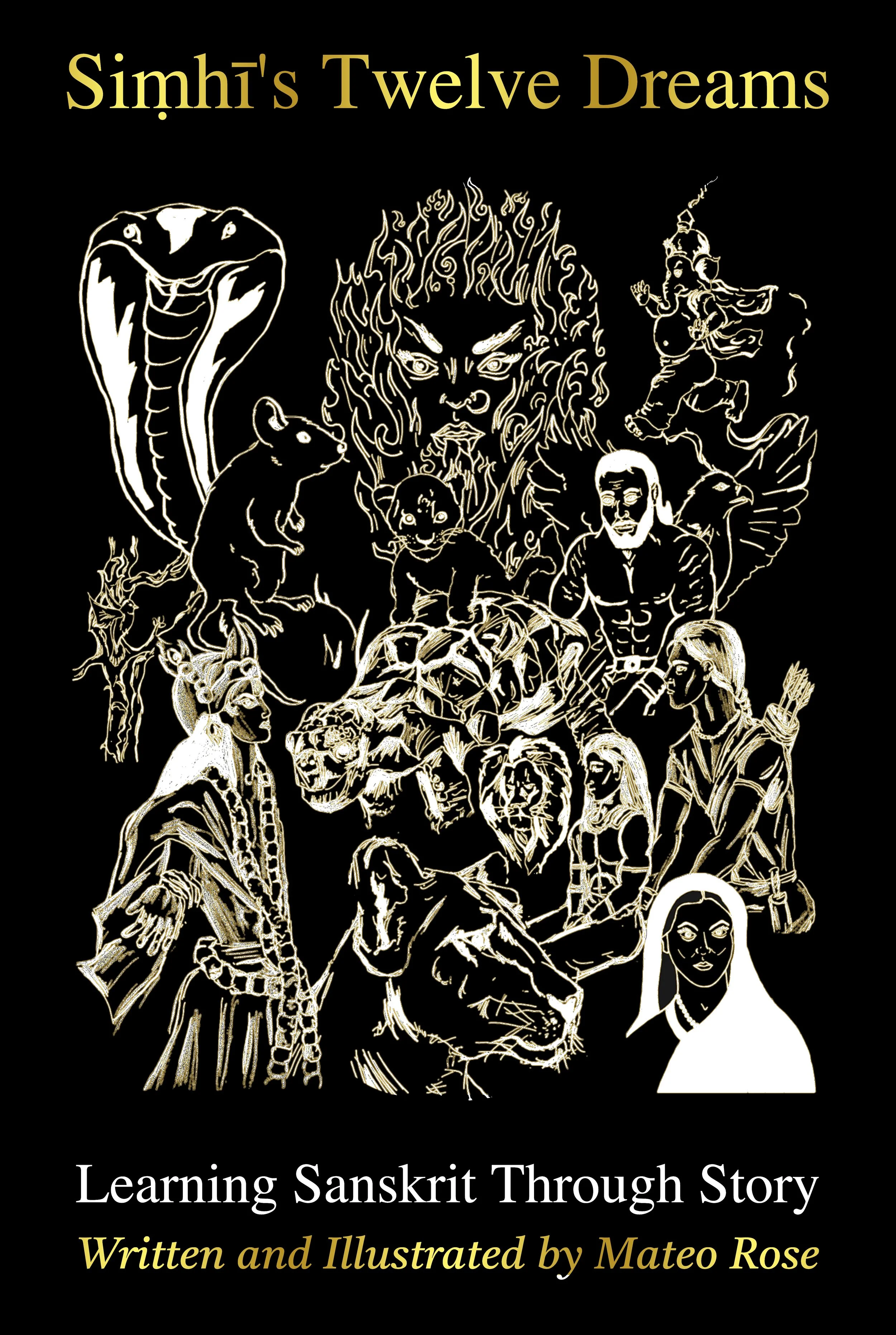
It continues in Siṃhī's Twelve Dreams, where the first whole sentences arrive — not as exercises, but as twelve dream-encounters, each word handed to her where she meets it, the script and the marks and the meaning set side by side.
It opens into Pakṣikā's Falling — a small bird falls to the bottom of the world, down to the serpent the cub once met, and Sarpa teaches her to read the old language the way he taught the cub: word by word, as it comes, inside the story itself. There is nothing to study apart from the telling. And the language goes deeper and more involved with each book, and will keep evolving as the series grows.
Each book is a door into the same world. Begin with The Beginning, or The Becoming, or Gāyatrī's Song — the choice is yours. The world only deepens the further in you go.
This is the warmth I always wanted in my own study: a language living inside a story you would read anyway, preparing you — quietly, before you notice — for the texts it was always pointing toward. You come for the lioness. You leave with the language.
Gāyatrī's Song is available now: