

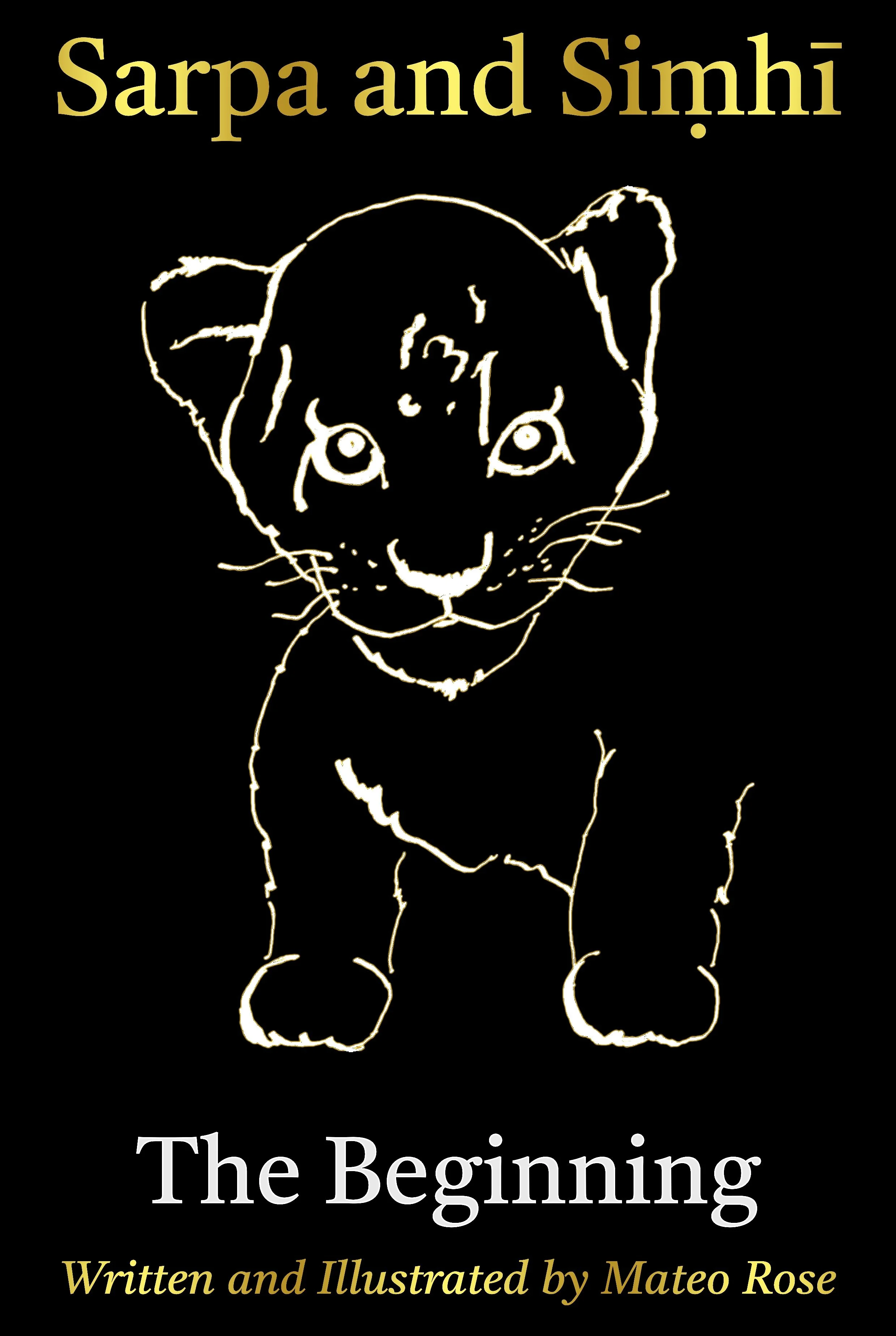
The Beginning
Sarpa and Siṃhī: The Beginning Illustrated children's edition
When a great storm separates a young lioness from her pride, she runs through the rain and the lightning until she finds shelter in a cave. In the darkness, she meets a wise serpent — and the serpent begins to tell her a story.
This volume contains two complete stories. The first is a picture book, illustrated on every spread. The second moves into chapter book territory — the language deepening, the illustrations stepping back, the story beginning to carry its own weight.
Its language is simple. Its questions are not.
For readers of Ursula K. Le Guin's Earthsea, Richard Adams's Watership Down, and the old Indian fables themselves.
For ages 5 and up, or as young as a child likes to listen.
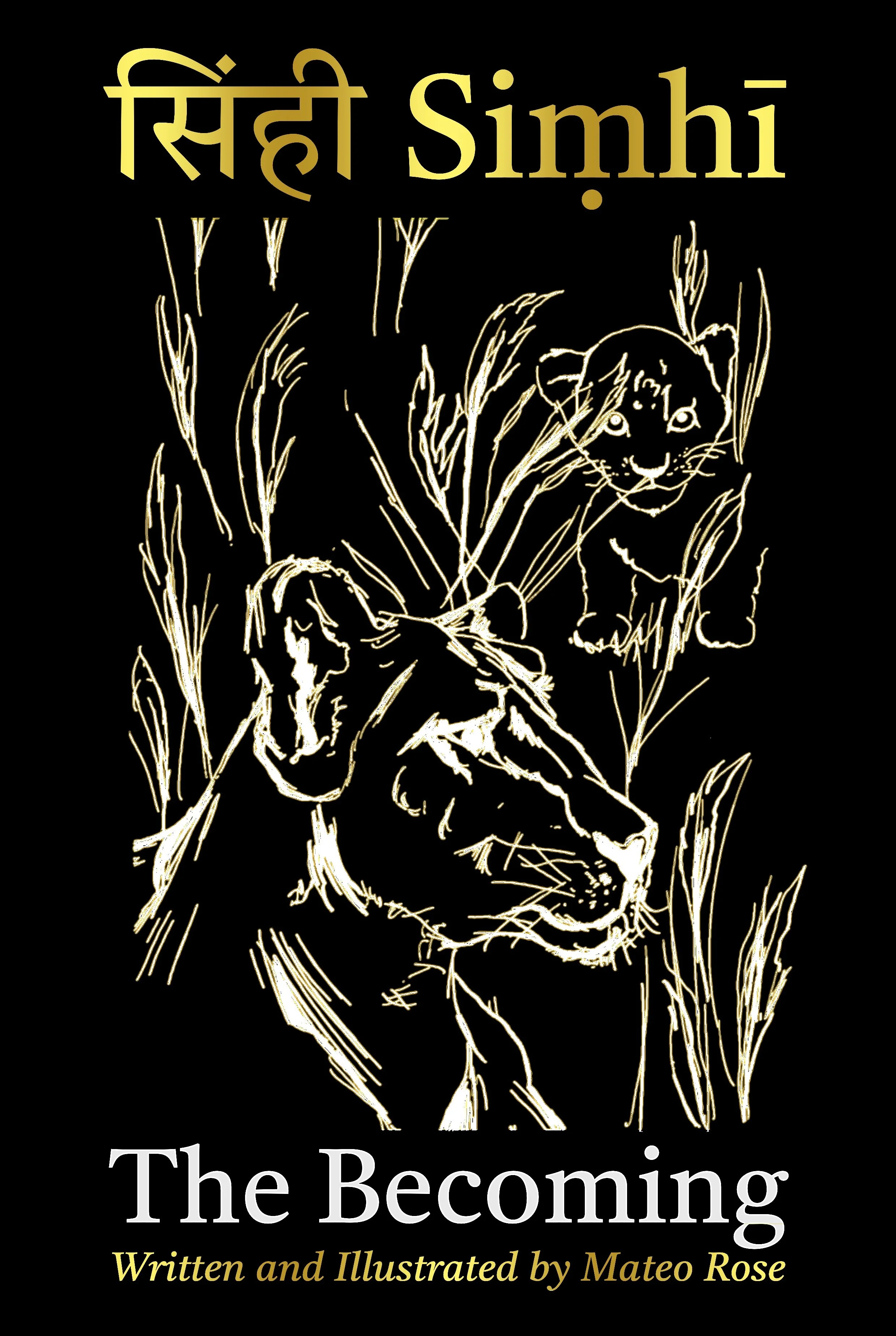
The Becoming
Siṃhī: The BecomingA literary novel in thirteen books · The complete English edition
When a great storm separates a young lioness from her pride, she runs through the rain and the lightning until she finds shelter in a cave. In the darkness, she meets a wise serpent — and the serpent begins to tell her a story.
Sarpa and Siṃhī: The Beginning is written for children and for the people who read to them. Because some stories are written for children and arrive like a gift for the adult holding the book.
Its language is simple. Its questions are not.
This volume contains two complete stories. The first is a picture book, illustrated on every spread — original black-and-white drawings accompanying each page of the young lioness Siṃhī as she finds her way through grief and fear toward courage and home. The second moves into chapter book territory — the language deepening, the illustrations stepping back, the story beginning to carry its own weight.
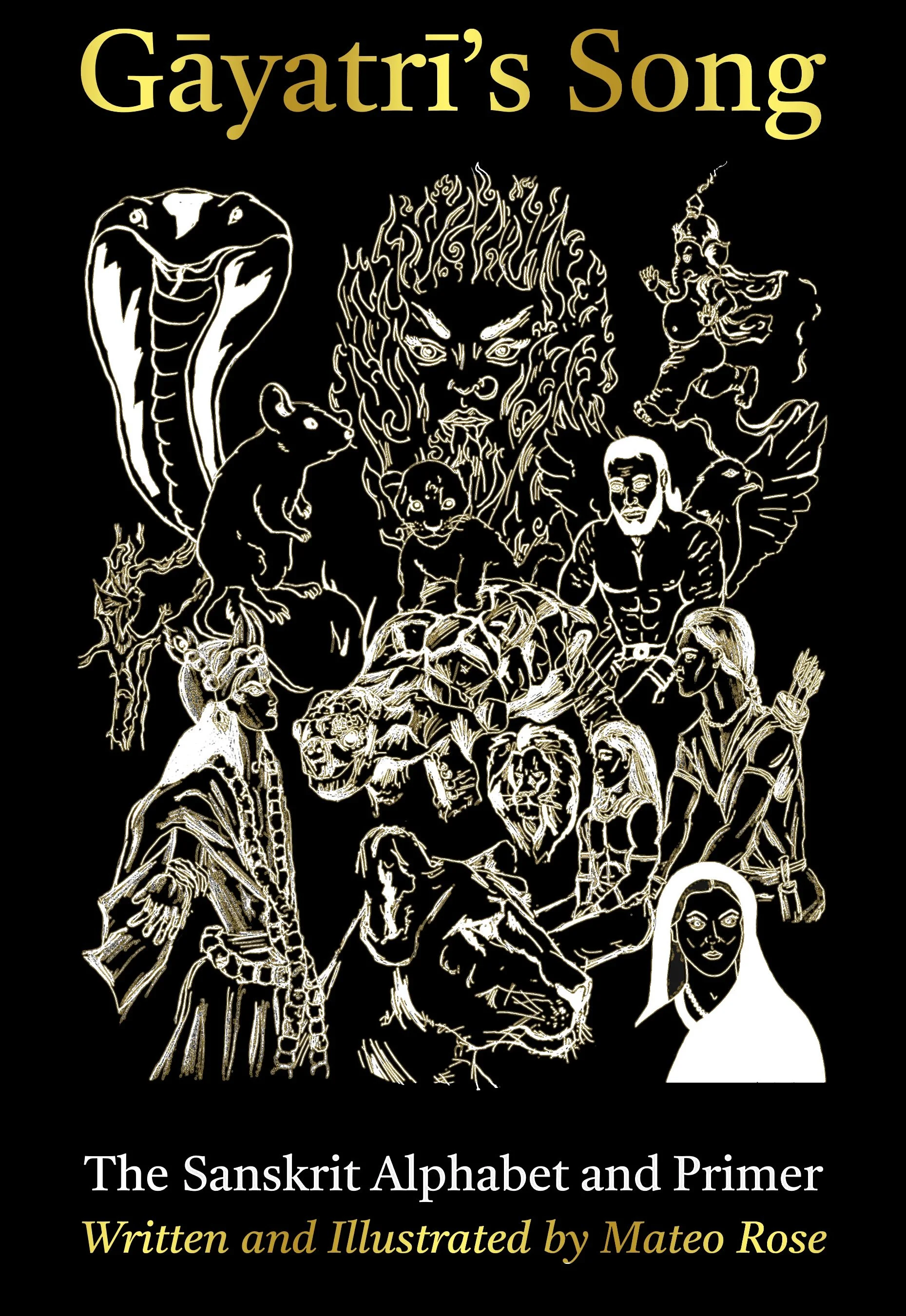
Gāyatrī's Song: The Sanskrit Alphabet and Primer
Some sounds are taught. Some are remembered. Some are sung before they are ever explained.
This one begins with all three.
✦ ✦ ✦
Before the storm. Before the cave. Before the serpent told its first story — there were three nights beneath an old tree, and a father teaching his daughter to hear.
Gāyatrī's Song is the origin of the lioness Siṃhī: a small cub who has lost her mother, learning the living language from her father, Vajra, across three nights under the stars. He does not begin with rules. He begins with her body — a sound she can feel in her chest before she is ever told its name. This is the quiet principle the whole book is built on, the old principle of dhāraṇā: the body is the first listener. The body remembers what the mind has not yet been told.
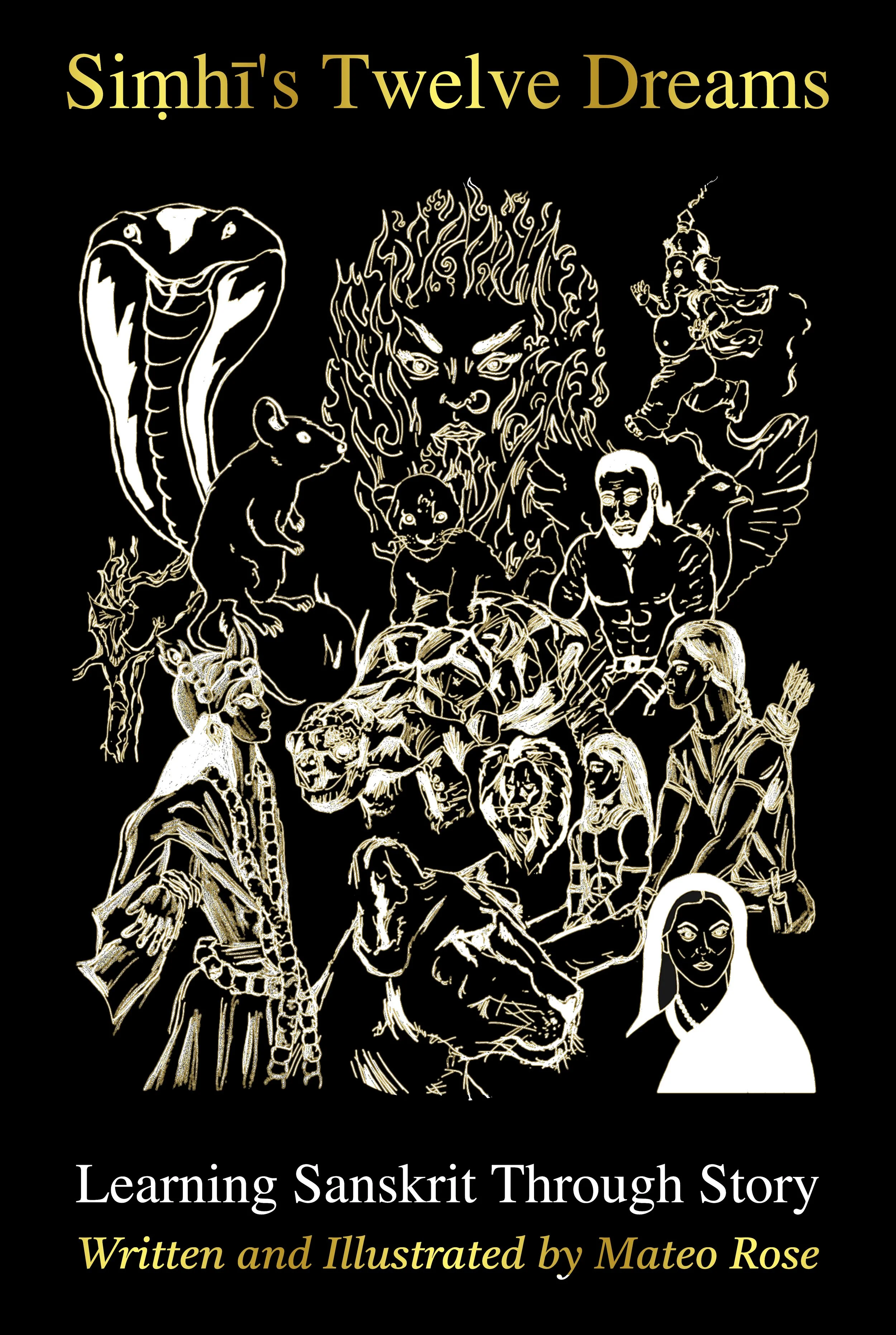
Siṃhī's Twelve Dreams: Learning Sanskrit Through Story
Some books teach you a language. This one lets you dream in it.
✦ ✦ ✦
She has the song. Now the language comes up to meet her.
In Gāyatrī's Song, a young lioness was given the whole of the Sanskrit alphabet across one long evening and the two nights that followed — every sound, the eight cases, her first complete sentence, drawn into the earth by her father's paw. Siṃhī's Twelve Dreams is what came after: twelve more nights, and in each one a dream, and in each dream someone who arrives carrying a word she has not yet been given.
A snake. A tortoise. A mouse. A great serpent. A warrior. A small bird. A fierce mother. An archer. An eagle. A prince. The blue one. A woman who walked back from the edge of death. She does not remember their faces when she wakes. She carries what they left anyway.